Blog
Blog Categories

How Much Are Veneers in Ontario?
Porcelain veneers in Ontario are about $1,130 to $2,380 per tooth, and composite veneers are about $460 to $1,030 per tooth. How much veneers in Ontario cost still depends on how many teeth you cover and whether those teeth need other treatment first. A shell on two front teeth costs less than a shell on every tooth that shows when you smile.

Can a Sinus Infection Cause Tooth Pain?
Yes. A sinus infection can cause tooth pain, usually a dull ache across the upper back teeth that comes with a blocked nose, not a sharp jab in one tooth when you bite or sip something cold. The maxillary sinuses, the pair of air spaces inside the cheekbones, sit directly above those roots. When the lining swells and mucus cannot drain, pressure lands on nerves that also serve the teeth. The teeth can be perfectly healthy. The pain is still real.
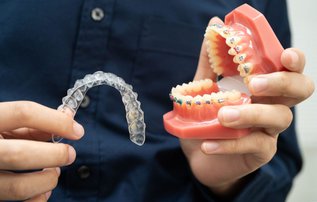
Why Choose Invisalign Over Traditional Braces? A Full Comparison
Invisalign vs braces is a choice between clear trays you remove to eat and braces that stay fixed to your teeth; the right one moves your bite the way it needs while you can live with it every day. Aligners suit some crowding, spacing, and mild bite problems, and you wear the trays most of the day. Fixed braces still handle a wider range of problems because the wire stays on.
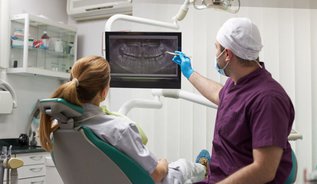
All-on-X vs All-on-4: How Full Arch Dental Implants Have Evolved and Why All-on-X Delivers More
All-on-X and All-on-4 both replace a full arch of missing or failing teeth with a fixed set of new teeth held in place by dental implants, but they are not quite the same. All-on-4 follows a set formula of four implants per arch. All-on-X keeps everything that made All-on-4 so successful and removes the fixed number, so the treatment uses however many implants your mouth actually needs, most often four, five or six, chosen from a fully digital plan built around your bone, your bite and your goals.

How to Know If You Have a Cavity: Signs, What It Looks Like and When to See a Dentist
You may have a cavity if a tooth has become sensitive to hot, cold or sweet foods, if you feel a dull ache or sharp pain when biting, or if you can see a white, brown or black spot or a small hole on the tooth surface. A cavity is a permanently damaged area of the hard surface of a tooth caused by tooth decay, and it develops when plaque bacteria produce acid that dissolves the enamel.
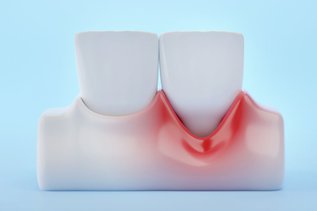
Receding Gums: Why Your Gums Are Pulling Back and How Dentists Treat It
Receding gums, also called gum recession, develop when the gum tissue around your teeth pulls back and exposes more of the tooth or its root. The most common causes are gum disease, brushing too hard, teeth grinding, naturally thin gum tissue and smoking.