
Dr. Amir Guorgui completed his dental education at the University of Montreal in 2001. He holds a prestigious Mastership designation at the College of Sedation, a recognition of his unwavering dedication to delivering top-notch sedation services to his patients. As an esteemed member of the Vaughan community, Dr. Guorgui takes great pleasure in connecting with his patients and imparting valuable knowledge about their oral health.
Dental Crowns: What Are They and How Do They Work?
A dental crown is one of the most widely used restorative treatments in modern dentistry, yet many patients remain uncertain about what it involves and when it is actually necessary. Whether a tooth has been weakened by decay, fractured under pressure, or treated with a root canal, a crown provides structural protection and restores normal function. Understanding what a dental crown is, how it works, and what to expect from treatment helps patients make informed decisions about their oral health.
Key Takeaways
- Dental crowns are a reliable solution for restoring teeth that are too damaged for fillings, helping preserve natural tooth structure and avoid extraction.
- They fully cover the visible part of a tooth, restoring strength, function, and appearance while protecting against further damage or infection.
- Crowns are commonly recommended after root canal treatment, for fractured teeth, severe decay, or when large fillings compromise tooth integrity.
- Different materials (porcelain, ceramic, metal, composite) offer varying levels of durability, aesthetics, and cost, depending on clinical needs.
- Most crowns last 10–15 years or longer with proper care, while metal crowns can last decades under optimal conditions.
- Good oral hygiene, regular dental visits, and avoiding excessive pressure (like grinding) are essential for maximizing crown longevity.
Find our Dental Clinic Near You
What Is a Dental Crown?
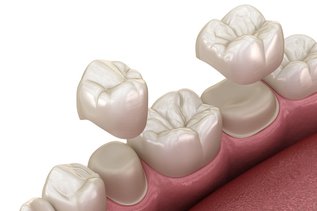
A dental crown, sometimes called a tooth cap or simply a crown, is a custom-made restoration that fits over the entire visible portion of a damaged or weakened tooth, from the gumline upward. It is designed to replicate the natural shape, size, and colour of the original tooth while providing structural reinforcement that a filling or other minor restoration cannot achieve.
Crowns serve three core clinical functions:
- Protection: When a tooth is severely decayed or fractured, a crown shields the remaining healthy structure from further damage and prevents bacterial infiltration that could lead to infection.
- Restoration: Following extensive dental work such as root canal therapy, a crown restores the tooth's strength and allows it to function normally for chewing and speaking.
- Enhancement: In cosmetic dentistry, crowns can improve the appearance of discoloured, misshapen, or poorly aligned teeth, contributing to a more uniform and aesthetically pleasing smile.
When Are Dental Crowns Necessary?
Not every damaged tooth requires a crown, but there are specific clinical situations where a crown is the most appropriate and effective solution. Dentists evaluate the extent of damage, the position of the tooth, and the patient's overall oral health before recommending treatment.
The most common indications for a dental crown include:
- Severe tooth decay: When decay is too extensive for a filling, a crown restores the tooth's structure and prevents further deterioration.
- Cracked or fractured teeth: A crown holds the segments of a fractured tooth together, reducing pain and preventing the crack from extending toward the root.
- Post-root canal treatment: Teeth that have undergone root canal therapy lose moisture and structural integrity over time, making them more susceptible to fracture. A crown placed over a root canal-treated tooth significantly reduces this risk.
- Worn-down teeth: Chronic grinding (bruxism) or acid erosion can reduce tooth height and weaken enamel to the point where a crown is needed to rebuild proper bite function.
- Large existing fillings: When a filling occupies most of the tooth structure, a crown provides better long-term protection than replacing the filling alone.
- Cosmetic improvements: Crowns can address persistent discolouration, irregular tooth shape, or alignment concerns that cannot be resolved through whitening or bonding.
Dr. Amir Guorgui, BSC, DMD, MACSD
, of Mapleridge Dentistry, explains:
"A crown is not simply a cosmetic solution. In many cases, it is what preserves a tooth that would otherwise need to be extracted. The decision to place a crown is based on a careful clinical assessment of how much healthy tooth structure remains and how the tooth is performing biomechanically."
Types of Dental Crown Materials
Dental crowns are fabricated from several materials, and the choice depends on the tooth's location, functional requirements, aesthetic expectations, and the patient's budget. Each material has distinct properties that make it more or less suitable for specific situations.
| Material | Primary Advantage | Best Used For | Typical Lifespan |
|---|---|---|---|
| Porcelain | Natural appearance, colour-matched | Front teeth, cosmetic cases | 10 to 15 years |
| Ceramic | Strength combined with aesthetics | Front and back teeth | 10 to 15 years |
| Metal (gold/alloy) | Exceptional durability, minimal tooth removal | Molars, high-force areas | 20 to 40+ years |
| Porcelain-fused-to-metal | Balance of aesthetics and strength | Various positions | 10 to 15 years |
| Composite resin | Lower cost | Temporary or budget-conscious cases | 5 to 7 years |
Porcelain Crowns
Porcelain crowns are among the most popular choices for visible teeth because they closely replicate the translucency and colour of natural enamel. They are frequently used for front teeth, where aesthetics are the primary concern. Porcelain crowns can be precisely shade-matched to surrounding teeth, making them nearly indistinguishable from the natural dentition.
Ceramic Crowns
Ceramic crowns offer a combination of visual appeal and mechanical strength, making them a versatile option for both front and back teeth. All-ceramic restorations have become increasingly common with advances in dental materials, and high-strength ceramics such as zirconia are now routinely used for posterior teeth that must withstand significant chewing forces.
Metal Crowns
Metal crowns, typically fabricated from gold or other alloys, remain the most durable option available. Research tracking over 2,300 crowns found a survival rate of 97% at 10 years and 85% at 25 years for high gold-based metal-ceramic crowns (International Journal of Prosthodontics). Because metal is highly resistant to wear and fracture, these crowns are particularly well-suited for molars. Their primary limitation is appearance, as the metallic colour is visible.
Composite Resin Crowns
Composite resin crowns are less expensive than other options but are generally less durable and more susceptible to staining over time. They are most commonly used as interim restorations or in situations where cost is a significant constraint.
The Dental Crown Placement Process
The standard dental crown procedure is completed over two appointments, though same-day options have changed this for many patients. Understanding each stage of the process helps reduce uncertainty and allows patients to plan accordingly.
Traditional Two-Visit Procedure
First appointment:
During the first visit, the dentist conducts a thorough examination of the affected tooth, which typically includes dental X-rays to assess the roots, surrounding bone, and the extent of any decay or damage. If the tooth is healthy enough to support a crown, the preparation stage begins.
The tooth is reshaped under local anesthetic to create space for the crown. This involves removing a controlled amount of enamel from the outer surface. If the tooth has extensive decay or structural loss, the dentist may first build up the core with a filling material to provide a stable foundation.
An impression of the prepared tooth is then taken, either using traditional materials or a digital intraoral scanner. This impression is sent to a dental laboratory where the permanent crown is custom-fabricated. A temporary crown is placed over the prepared tooth to protect it during the fabrication period, which typically takes one to two weeks.
Second appointment:
At the follow-up visit, the temporary crown is removed, and the permanent restoration is checked for fit, colour, and bite alignment. Once the dentist is satisfied with the result, the crown is permanently cemented onto the prepared tooth. Minor adjustments may be made to ensure a comfortable and accurate bite.
Same-Day CEREC Crown
For patients who prefer a streamlined experience, same-day crown placement using CEREC (Chairside Economical Restoration of Esthetic Ceramics) technology is now available at Mapleridge Dentistry. CEREC uses digital intraoral scanning and computer-aided design and manufacturing (CAD/CAM) software to design and mill a ceramic crown chairside, often within a single two-hour appointment.
This eliminates the need for temporary crowns and reduces the number of dental visits required. The digital scanning process is also more precise than traditional impression-taking, reducing the likelihood of fit adjustments at cementation. Mapleridge Dentistry's CEREC technology allows patients to leave the clinic with a completed, permanently placed restoration in one visit.
How Dental Crowns Work
A dental crown functions by encasing the entire visible portion of the tooth, distributing chewing forces evenly across the restored structure rather than concentrating them on a weakened or cracked area. This load distribution makes crowns particularly effective for fractured or root canal-treated teeth, both of which are more vulnerable to splitting under biting forces.
The crown also serves as a seal between the tooth and the oral environment. Fully covering the prepared tooth surface, it prevents bacteria from reaching the underlying dentine or pulp tissue, significantly reducing the risk of recurrent decay beneath the restoration. For teeth that have already been treated for infection, this bacterial barrier is especially important in preventing reinfection.
Over time, the cement bond between the crown and tooth integrates well with the prepared tooth surface. With proper oral hygiene and regular dental monitoring, this bond can remain stable for many years.
How Long Do Dental Crowns Last?
Crown longevity depends on several interrelated factors, including the material selected, the quality of placement, the patient's oral hygiene habits, and functional factors such as bruxism. The study, published in the European Journal of Oral Sciences, which tracked 1,037 single-unit crowns placed over nearly four decades, demonstrated that most crowns function well for a decade or more, with many remaining clinically successful for 20 years with proper maintenance. The study also found that crowns placed over endodontically treated teeth carry a higher failure risk, with a hazard ratio of 1.89 compared to vital teeth.
As a general clinical benchmark:
- Porcelain and ceramic crowns: 10 to 15 years
- Metal crowns: 20 to 40 years or longer
- Porcelain-fused-to-metal crowns: 10 to 15 years
- Composite resin crowns: 5 to 7 years
These ranges are averages. Individual outcomes vary based on maintenance and clinical factors.
Dental Crown Aftercare and Maintenance
A crown is a durable restoration, but it requires consistent care to achieve its full lifespan. The tooth beneath a crown can still be affected by decay if oral hygiene is neglected, particularly at the gumline where the crown margin meets the tooth.
Effective aftercare involves:
- Brushing twice daily with a soft-bristled toothbrush, paying close attention to the gumline around the crown
- Flossing daily, including around the crown margin, to remove plaque that brushing cannot reach
- Avoiding chewing on hard objects such as ice, pen caps, or hard candy, which can crack or dislodge the crown
- Using a custom night guard if bruxism is present, as grinding places excessive stress on all restorations and natural teeth
- Attending regular dental checkups and professional cleanings at Mapleridge Dentistry so the crown and surrounding tissues can be monitored for early signs of wear, marginal leakage, or gum changes
Patients who maintain good oral hygiene and attend routine dental visits consistently achieve better crown longevity than those who do not.
Dental Crowns in Cosmetic Dentistry
Beyond restorative applications, dental crowns play a meaningful role in cosmetic dentistry . For patients seeking significant aesthetic improvement, a crown can address concerns that bleaching, bonding, or veneers cannot fully resolve.
Crowns used in cosmetic contexts are typically indicated when:
- A tooth is severely discoloured and does not respond to whitening treatment
- A tooth has an irregular or disproportionate shape that affects smile symmetry
- A tooth requires structural restoration alongside cosmetic improvement
In smile makeover planning, crowns are often combined with other treatments such as porcelain veneers , teeth whitening, or dental implants to achieve a comprehensive result. The advantage of a crown in these cases is that it simultaneously addresses both function and aesthetics in a single restoration.
Dr. Amir Guorgui, BSC, DMD, MACSD
, notes:
"Patients sometimes arrive expecting a cosmetic solution and find that the underlying tooth actually needs structural support first. In those cases, a crown is the ideal choice because it achieves both goals at once — protecting what remains of the natural tooth while delivering a result that looks completely natural."
Choosing the Right Crown: What to Discuss with Your Dentist
Selecting the most appropriate crown material and approach is a clinical decision that takes into account multiple patient-specific factors. There is no universal answer, and the recommendation will differ based on the tooth's location, the degree of damage, the patient's bite forces, and their aesthetic expectations.
Key factors to discuss during your consultation at Mapleridge Dentistry include:
| Factor | Why It Matters |
|---|---|
| Tooth position | Front teeth prioritize aesthetics; back teeth prioritize durability |
| Extent of damage | More damage may require a specific material or build-up procedure |
| Presence of bruxism | Grinding increases wear on certain materials |
| Aesthetic expectations | Colour-matching requirements influence material choice |
| Budget and insurance | Costs vary by material; coverage differs by plan |
Your dentist will also advise on whether a crown is the appropriate solution or whether an alternative, such as a dental onlay or a dental bridge , may be more suitable, depending on the clinical situation.
Dental Crowns vs. Other Restorative Options
Understanding where a crown fits within the broader range of restorative treatments helps patients have more informed conversations with their dentist. A crown is not always the first-line solution, but in certain situations, it is the most appropriate option.
| Restoration | When It Is Used | Key Advantage Over a Crown | Limitation |
|---|---|---|---|
| Filling | Minor to moderate decay | Preserves more tooth structure | Cannot support extensively damaged teeth |
| Onlay | Moderate damage affecting cusps | Less tooth removal than a crown | Not suitable for severe structural loss |
| Crown | Extensive decay, fracture, post-RCT | Full coverage and protection | Requires significant tooth preparation |
| Dental implant | Missing tooth | Replaces the entire tooth, including the root | Not appropriate when a natural tooth can be saved |
When a natural tooth can be preserved, dentists generally prefer to do so. A crown makes this possible in situations where lesser restorations would not provide adequate protection.
What to Expect After Crown Placement
For most patients, the period immediately following crown placement involves minimal disruption. Some mild sensitivity to temperature or pressure is normal in the first few days, particularly if the tooth preparation extended close to the pulp. This sensitivity typically resolves within one to two weeks.
If bite discomfort persists beyond a few days or the crown feels uneven when biting, patients should contact their dentist promptly. Minor bite adjustments can be made quickly and are a routine part of post-placement care. Any discomfort that intensifies or is accompanied by swelling should be assessed without delay, as it may indicate an issue with the underlying tooth requiring further treatment.
What to Remember About Dental Crowns
A dental crown is a well-established and clinically reliable restoration that addresses a wide range of dental problems, from structural damage and decay to cosmetic concerns and post-treatment protection. When placed appropriately and maintained with consistent oral hygiene, a crown can preserve a natural tooth for a decade or more, often preventing the need for extraction and tooth replacement.
The most important step is early evaluation. The sooner a compromised tooth is assessed, the greater the likelihood that it can be restored with a crown before more complex treatment becomes necessary. Patients who notice sensitivity, discomfort when biting, or visible cracks in a tooth should schedule a consultation promptly rather than waiting for symptoms to worsen.
Frequently Asked Questions About Dental Crowns
What is a dental crown?
A dental crown is a custom-made cap that fits over the entire visible portion of a damaged, decayed, or weakened tooth. It restores the tooth's shape, size, and strength while protecting it from further damage. Crowns can be made from porcelain, ceramic, metal, or composite resin, depending on the tooth's location and the patient's needs.
What is a crown on a tooth used for?
A crown on a tooth is used to protect a tooth that is too damaged for a filling, to restore a tooth following root canal treatment, to hold together a cracked or fractured tooth, or to improve the appearance of a discoloured or misshapen tooth. It may also be used to anchor a dental bridge or cover a dental implant.
What are crowns for teeth made of?
Dental crowns are made from several materials, including porcelain, all-ceramic (including zirconia), porcelain-fused-to-metal, gold or metal alloys, and composite resin. Each material has different properties in terms of durability, appearance, and cost. Your dentist will recommend the most appropriate option based on the tooth's position and your clinical needs.
How long does a dental crown last?
With proper oral hygiene and regular dental visits, most crowns last between 10 and 15 years. Metal crowns, particularly those made from gold alloys, have demonstrated 10-year survival rates of 97% in clinical research and can last considerably longer. An individual's lifespan depends on the material chosen, oral habits such as grinding, and the crown's maintenance.
Does getting a crown hurt?
The crown preparation procedure is performed under local anesthesia, so patients should not experience pain during the appointment. Some sensitivity around the prepared tooth is normal in the days following the procedure and typically resolves on its own. If discomfort is significant or persistent, the patient should contact their dentist.
Can a tooth under a crown still decay?
Yes. The natural tooth structure beneath a crown can still develop decay, particularly at the margin where the crown meets the tooth at the gumline. This is why regular brushing, flossing, and professional dental cleanings remain important even after a crown is placed.
Is a crown always necessary after a root canal?
In most cases, yes. Following root canal treatment, the tooth loses moisture and becomes more brittle, increasing the risk of fracture during chewing. A crown placed over a root canal-treated tooth significantly reduces this risk and extends the tooth's functional life. Your dentist will assess whether a crown is clinically necessary based on how much natural tooth structure remains.
What is the difference between a crown and a veneer?
A crown covers the entire tooth from the gumline upward and is used when structural restoration is needed. A veneer covers only the front surface of a tooth and is primarily a cosmetic solution for teeth that are otherwise structurally sound. Veneers require minimal tooth preparation, while crowns require more significant reshaping of the tooth.
