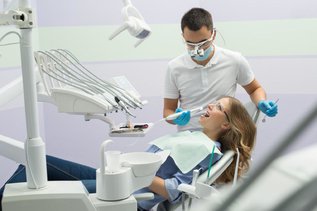

Dr. Amir Guorgui completed his dental education at the University of Montreal in 2001. He holds a prestigious Mastership designation at the College of Sedation, a recognition of his unwavering dedication to delivering top-notch sedation services to his patients. As an esteemed member of the Vaughan community, Dr. Guorgui takes great pleasure in connecting with his patients and imparting valuable knowledge about their oral health.
Is Hydrogen Peroxide Mouthwash Safe? Benefits, Risks, and How to Use It
Hydrogen peroxide mouthwash is safe when the liquid is already at a low strength, you spit it out every time, and you stop if your mouth gets sore. A brown bottle marked 3% is twice as strong as the antiseptic rinses licensed in Canada for the mouth, so that bottle is not ready to swish. Mix equal parts water to bring 3% down to about 1.5%. If you cannot spit it out, and if you're under 12, stay away from the cup.
The useful part is narrow. The oxygen that fizzes on the tongue can lift loose debris off a small sore, a cheek bite, or a mildly inflamed gum edge. It does that for a short contact, then you spit. It does not scrape hardened tartar off a tooth, it does not enter a deep space under the gum, and it does not change the colour of enamel the way a whitening gel does. Brushing and flossing still do the daily work. The cup is an extra, and only while a minor sore is the reason you mixed it.
The risks sit in the strength, the clock, and the swallow. A mix that is too strong, or a swish you hold until it stings, irritates the cheek and the gum. A habit that runs every morning for weeks asks the mouth to tolerate an oxidizer as if it were water. Swallowing a 3% bottle is a reason to get medical help, not a stomach ache to sleep off. Read the front of the bottle before you pour, measure the water, and treat a sore that is still raw after several days as a reason to be examined.
Key Takeaways
- A hydrogen peroxide mouthwash is a short antiseptic rinse for a minor sore, not a stand-in for brushing, flossing, or a professional cleaning.
- A licensed Canadian antiseptic oral rinse is 1.5% hydrogen peroxide, 10 mL, up to four times a day, for people 12 and older.
- Equal parts 3% peroxide and water is about 1.5%. One part peroxide and two parts water is about 1%, which is weaker, not the same.
- Spit every time. Children under 12 are outside the oral-rinse directions, and a 3% bottle labelled for skin is not a mouth rinse.
- Stop if the gum or the cheek stays red, swollen, or sore. A stronger mix won't fix a sting that remains after you spit.
- Bleeding that comes back every week needs tartar removal and a gum measurement. A rinse cannot do either job.
Find our Dental Clinic Near You
Is a hydrogen peroxide mouthwash safe?
A hydrogen peroxide mouthwash is safe inside a fence: the right strength, a mouth that can spit, and a sore that is actually minor. Step outside that fence and the same liquid becomes an irritant, or a poison-control problem if you swallow the strong bottle. Canada licenses a ready-made antiseptic mouth rinse and a separate 3% product for skin, and mixing those two up is how a first-aid bottle ends up in a swish.
What a licensed oral rinse is for
A marketed antiseptic oral rinse is licensed at 1.5% hydrogen peroxide , with a dose of 10 mL, from one to four times a day, for adults and children 12 and older. Ten millilitres is about two teaspoons, not a full glass you have to force around the mouth. The stated uses are cleansing of canker sores, minor wounds, minor gum inflammation, and mouth burns from minor dental work, dentures, orthodontic appliances, a bump or scrape, a cheek bite, a toothbrush abrasion, or other minor irritation of the mouth or gums.
Read that list as a boundary. A raw patch under a new denture, a nick from a brace wire, or a small canker sore sits inside it. A tooth that wakes you at night, a swelling in the face, a socket from a tooth taken out this morning, or a gum that bleeds every time you eat does not. Those need someone looking in the mouth. Adding days to the rinse does not move a wire that pokes or a denture that rubs.
The same licence says the product is not recommended for children under 12, that you should avoid swallowing it, and that you should keep it out of the eyes. If the gums or the mouth become red, swollen, or sore, you stop and ask a health care practitioner. A homemade cup does not become acceptable for a younger child because you added more water. The age line is about swallowing control and about tissue that is still easy to irritate, not about a number you can bargain with.
What a 3% bottle is for
The brown bottle most people already own is a different licence. Common 3% products are licensed as a first aid antiseptic for external use only , for minor wound cleansing on the skin. The warning on that licence is plain: if it is swallowed, call a poison control centre or get medical help right away. It also says to keep it out of the eyes, not to use it on deep or puncture wounds, and to stop if irritation develops or a skin wound doesn't improve after seven days.
That label is why 3% does not go straight into a swish. It is twice the strength of the oral rinse above. Diluting it with a measured volume of water can land you near 1.5%, and the arithmetic is in the mixing section below. The diluted cup is still not the licensed mouth product. It has no printed dose, no checked recipe, and no child-resistant directions written for the mouth. Use the product that was made for the mouth when you can. Dilute the 3% bottle only when you can read the percent and measure the water.
What can this rinse actually help?
Hydrogen peroxide mouthwash benefits are local and short: a cleaner minor sore, and a calmer gum edge, for a few days. The oxygen that fizzes when the liquid meets debris is what loosens that surface film, and then you spit. It does not earn a permanent spot beside the toothbrush, and it is not a whitener or a cure for gum disease.
Minor sores the label actually names
The sores that fit are the ones you can point at and that have an obvious cause.
- A canker sore on the cheek or the inner lip, small enough that you are not also swollen or feverish.
- A cheek bite or a toothbrush scrape that is raw today and was not raw last week.
- A rub from a new denture or a poke from a brace wire, especially if the denture or wire is being adjusted.
- A mild gum edge that is tender after you started flossing again, and that is not bleeding from a deep pocket.
Use the rinse after you brush, not instead of the brush. Take about 10 mL if you are copying the licensed dose, swish it along the sore spot, and spit. Do not swallow the foam to "finish" a dose. If the cause is a wire or a denture edge, book the adjustment. The rinse only keeps the ulcer cleaner until you fix the cause.
What the fizz leaves in place
Plaque is the soft film that rebuilds on teeth every day. Leave it, and saliva minerals harden it. That hard deposit is tartar. A rinse, even a fizzy one, does not dissolve a ledge of tartar the way water dissolves sugar. The ledge roughens the root, collects more plaque, and keeps the gum angry. Tartar comes off at a teeth cleaning , with instruments, not in a bathroom cup.
Breath is the other place people over-read the fizz. A rinse can thin mucus for an afternoon. A coated tongue keeps producing the odour after you spit. Tongue scraping lifts that coating off the tongue's surface, which mouthwash only wets. If the breath stays foul and the gums bleed, the cause is usually under the gumline, and neither the cup nor the scraper replaces that visit.
Which side effects mean you should stop?
Hydrogen peroxide mouthwash side effects begin as a brief tingle and a bitter or metallic taste, which usually fades after you spit and rinse with plain water. Trouble starts when the strength is high, you swish for too long, or the cup becomes a morning habit. The licence already names the stop signs: redness, swelling, or soreness of the gums or the mouth.
Irritation you can feel the same day
Most of the early warning is local. It shows up in the hour after you spit, not weeks later.
- A sting that stays. A few seconds of tingling can happen. Pain that is still there after you spit means the mix was too strong or you held it too long.
- A gum that looks angry. Redness, swelling, or soreness is the warning on the oral-rinse licence. Stop, and have it seen if it is still there the next day.
- New sensitivity to cold. Sweet food or cold water starts to bite after several days of rinsing. Stop. Do not switch to a stronger mix to push through it.
- A taste that will not leave. A metallic or bitter taste should fade once you stop. If it hangs on for days, say so at a visit.
Do not press undiluted 3% onto a sore with cotton. That uses a skin antiseptic, at full strength, on tissue the label never covered. Then you can't tell a chemical burn from the original spot. Stop so the tissue can show what is actually there.
"A short dilute rinse can quiet a raw edge of gum for a few days. If that edge bleeds the next week again, I want the pocket depths, because the liquid never reaches tartar on the root," says Dr. Christine Yoo, DDS, Mapleridge Smile Centre .
Swallowing, children, and a bottle that is too strong
Spit every time. Hydrogen peroxide is not a drink, and the 3% licence treats swallowing as an emergency: call a poison control centre or get medical help right away. Bring the bottle, or a photo of the label, so the percent is not a guess. Do not make yourself vomit unless a poison centre or a clinician tells you to.
A small accidental taste of a very dilute mix may only upset the stomach. Swallowing 3% on purpose, or swallowing anything stronger than 3%, is a different event. Children under 12 are outside the oral-rinse directions because the method relies on reliable spitting. A weaker homemade cup doesn't bring them back in.
How do you dilute hydrogen peroxide for mouthwash?
To dilute hydrogen peroxide for mouthwash, start with a bottle labelled 3% and add a measured amount of water. Using hydrogen peroxide as mouthwash doesn't mean pouring from the cap, because the percent drops only when you spread that same peroxide through a larger volume. If the label is not 3%, or you already own a rinse sold at 1.5% for the mouth, do not invent a second recipe.
Equal parts lands near 1.5%, and one-to-two lands near 1%
Take 15 mL of 3% peroxide, about one tablespoon. Add 15 mL of water. You now have 30 mL, so the strength is about 1.5%. The peroxide has been spread through twice the volume. That equal-parts mix matches the strength figure on the licensed oral rinse. It does not match the product. The kitchen cup still has no printed dose.
Take the same 15 mL of 3% peroxide and add 30 mL of water. You now have 45 mL, so the strength is about 1%. That is one part peroxide and two parts water. It is not 1.5%. People swap these two recipes and then wonder why one cup stings and the other does not. The table is the whole difference.
| Mix | Water added to 15 mL of 3% | About this strength | What to do with it |
|---|---|---|---|
| Equal parts, 1 to 1 | 15 mL | 1.5% | Same strength figure as a licensed oral rinse. Spit it out. It is still not that product. |
| One part peroxide, two parts water | 30 mL | 1% | Weaker than 1.5%. Still spit. Still not a daily habit. |
| No water | none | 3% | The usual skin bottle. Do not swish it straight. |
| Higher than 3% | Do not mix for the mouth | Above 3% | Do not use it in the mouth at all. |
Swish about 10 mL over the sore spot, then spit. That is the licensed dose, not the whole 30 mL you just mixed. Tip the rest out. If the taste hangs on, rinse with plain water and spit that too. Do not hold the liquid until the gum stings. If a dentist gave you a number of seconds, use that number and no more.
Read the bottle before you mix
Four checks take less time than dealing with the wrong liquid.
- The percent on the front. If it is not 3%, do not use the volumes in the table.
- The words on the directions. Skin, cuts, and external use mean it is not a ready-made mouth rinse.
- The cap and the storage. A bottle left open in a bright window often loses strength, and the loss is invisible.
- Who it is for. Do not mix a cup for a child under 12, even a weaker cup.
Mix a fresh cup each time, and pour it out when you are done. Do not store the mix in a drink bottle. People swallow what looks like water, and a child will try a cup left on the sink. Keep the stock bottle closed and out of direct sunlight. If the label does not say 3%, it does not enter this recipe.
Should a hydrogen peroxide gargle replace a swish?
A hydrogen peroxide gargle is the same dilute liquid tipped toward the throat, instead of held against the gum and the cheek. You still measure, use a low strength, and spit. The licensed rinse is for the mouth and the gums, so a sore throat or a cough is a guess, not a listed use.
When a swish is the right motion
Use a swish when you can point at the spot: a canker sore, a cheek bite, a denture rub, a tender gum edge. Park a small sip on that spot, move it gently, and spit. You do not need to tip your head back. Tipping the head back is how a mouthful slides toward the throat and gets swallowed by accident.
A gargle belongs only if a clinician has already named the strength. Holding the liquid until your eyes water is a longer exposure, not a stronger treatment.
What a gargle will not clear
Foam on the tongue is the oxygen reaction. It is not proof an infection has cleared. A throat that hurts on one side, a fever, trouble swallowing saliva, or swelling under the jaw needs an exam the same day.
A dental abscess can feel like a sore throat because the back teeth and the throat share nerves. Peroxide will not drain a gum boil, and it will not settle a tooth that hurts when you bite. If biting is the trigger, stop the gargle and have the tooth seen.
When a hydrogen peroxide rinse cannot fix bleeding gums
A hydrogen peroxide rinse can wet a gum that bleeds on the brush, and a mildly inflamed edge can look calmer for a few days. That calm is not treatment of gum disease. Plaque left on the tooth hardens into tartar, which can only be professionally removed , and early gingivitis turns around with brushing, flossing, and a cleaning, not with a longer swish.
What bleeding on the brush usually means
Blood on the brush is a sign, not a stain to hide. Brush twice a day with a soft brush, and floss once a day, even if the gums bleed. Skipping the floss because of the blood leaves the plaque that caused it. Slide the floss down the side of the tooth and back up. Do not snap it into the tissue.
If the bleeding is new and the gum is only tender at the edge, a short course of a labelled 1.5% rinse can treat minor gum inflammation. Stay inside the printed schedule: 10 mL, up to four times a day, age 12 and older. If you are still bleeding at the end of the week, stop improvising. The week was the test. The rinse failed it.
A poke from a brace wire often causes a cheek ulcer rather than a gum infection. The licence includes minor irritation from orthodontic appliances, so a short dilute rinse can fit while the wire is trimmed or covered. Stop the rinse once the poking stops. A month of rinsing while the wire keeps cutting does not fix the wire.
Pockets a rinse cannot enter
A pocket is the space between the gum and the tooth. A clinician measures it with a thin probe. Numbers that climb mean the gum has pulled away, and tartar is sitting where a toothbrush cannot reach. You cannot see that space in the bathroom mirror. The measurement is what tells you whether a rinse belongs in the plan at all.
Once pockets are deep, non-surgical gum therapy is the cleaning that reaches the root. At that visit, the hard deposit and the bacterial film come off above and below the gumline, so the tissue has a chance to sit back against the tooth. A peroxide rinse is not a home version of that appointment. Pouring a stronger mix "to get into the pocket" burns the lining and leaves the tartar where it was.
Receding gum is a related limit. The gum has already moved down the root. A rinse will not grow it back. Early care can stop the cause from taking more tissue, whether it's heavy brushing, tartar, or a pocket. If the tooth looks longer than it did last year, or the root is sensitive at the gumline, the next step is the probe, not a second tablespoon of peroxide.
Why a peroxide mouthwash is not a whitening plan
A peroxide mouthwash mixed as a sore rinse is not a tooth-whitening treatment. The 1.5% oral product is licensed to clean minor sores and mild gum irritation, while whitening asks peroxide to sit on enamel long enough to change colour inside the tooth. A few days of spitting out a dilute rinse will not do that work, and you shouldn't hold a 3% skin bottle on the enamel to force it.
What won't a short rinse change?
Surface stain from coffee or tea sits in the pellicle, the thin film on enamel. Polishing at a cleaning lifts a lot of that stain. A rinse does not polish. Deeper colour, the kind that lives in the tooth rather than on it, is the job people book as professional teeth whitening . The dentist monitors that visit and addresses decay or gum disease before anyone bleaches the tooth.
Store-bought rinses that already contain peroxide
Some mouthwashes list hydrogen peroxide on the back of the bottle at a low percent, often around 1.5%, with fluoride or flavour in the same liquid. Those products are still label-led. Read the age line, the dose, and the instruction to spit. A pretty mint flavour does not change the swallow rule.
Do not stack them. Using a peroxide mouthwash and also dabbing 3% on the same gum, or wearing a whitening tray the same week, stacks oxidizer on tissue that has already had its contact for the day. Pick one plan. If a dentist has prescribed a medicated rinse, that instruction replaces the homemade cup. Do not add peroxide on top because the prescription tastes mild.
Where a hydrogen peroxide oral rinse fits in the day
Use a hydrogen peroxide oral rinse after brushing and flossing, in a measured sip of about 10 mL, and only while a minor sore is still the reason you mixed it. You still need to brush twice a day and floss once a day. Leave the bottle in the cupboard between those brushes, rather than sipping a dilute mix through the afternoon.
Who should skip the cup?
Skip it and ask a dentist or physician first if any of these are true.
- You are under 12, or you are helping a child who cannot be trusted to spit every drop.
- You cannot spit reliably because of a swallowing problem, a disability, or nausea.
- The gum is swollen, the face is swollen, or a tooth hurts when you bite.
- You have a fresh extraction socket, a mouth wound that is still open, or a clinician has told you not to rinse yet.
- You already use a prescribed mouth rinse, a whitening tray, or a peroxide gel.
Those lines mean this oxidizer is the wrong extra until someone who can see the mouth says otherwise. Fluoride toothpaste and floss still stand on their own.
When the sore outlasts the rinse
Give a minor sore a short window, a stretch of days rather than a season. If the spot is growing, if a new one appears every week, if a white or red patch doesn't hurt but also doesn't go away, or if the same gum bleeds at every brushing, the window has closed. A patch that does not hurt is not automatically harmless. Painless patches are a reason to be seen, not a reason to keep swishing.
Bring the bottle to that visit, or a photo of the percent and the ingredients. Say how many days you used it and whether you diluted it. That detail changes the exam. A chemical irritation and a canker sore can look alike on day one. They don't look alike once you stop the irritant and give the tissue a few days to show its real pattern.
A low strength and a short job are the whole answer
The rinse earns a place only when the strength is about 1.5%, you spit, and the target is a minor sore or a mildly inflamed gum edge. Miss one of those and the cup is an irritant, or a skin bottle that should have stayed on the skin. Equal parts 3% bottle and water make about 1.5%. One part peroxide and two parts water come out to about 1%. Neither mix removes tartar, reaches a deep pocket, or changes a tooth's shade.
Bleeding that returns, a pocket you cannot see, a receding gumline, and a tooth that hurts when you bite are signs. Brush twice a day, floss once a day, and use the rinse only after those steps, for a short stretch, while the sore is still the reason you mixed it.
If a sore is still raw after several days, or the gums bleed every time you brush, Mapleridge Smile Centre in Maple can measure the spot and tell you whether a rinse still belongs in the plan.
Frequently Asked Questions
Is it a good idea to use hydrogen peroxide as mouthwash?
It is a reasonable short rinse for a minor sore if the strength is about 1.5%, you spit, and you are 12 or older. It is a bad idea to use it straight from a 3% skin bottle as a daily substitute for brushing, or for a child who might swallow it. If you can buy one, a product labelled for the mouth is the simpler choice.
Is hydrogen peroxide good for receding gums?
No. A rinse will not grow gum back onto the root. Recession requires addressing the cause, which may be heavy brushing, tartar, or a pocket under the gum. A dilute rinse might calm a tender edge for a few days. It does not stop the gum from moving if the cause is still there.
Is it better to rinse with salt water or hydrogen peroxide?
Salt water does not oxidize the gum the way peroxide does, so it is the milder comfort rinse when someone might swallow, including a child under 12. Peroxide has a strength limit, an age limit, and a real sting if you mix it wrong. Neither liquid removes tartar. If the goal is comfort and the person cannot spit reliably, saltwater is the safer of the two. If the goal is a short antiseptic clean of a minor sore in an adult who can spit, the 1.5% peroxide rinse is the one with a licence for that job.
Does a hydrogen peroxide mouthwash whiten teeth?
A 1.5% sore rinse isn't a whitening product, and a few days of spitting it will not change a tooth's shade. Whitening uses a different plan, with the gel strength chosen for that tooth and with sensitivity as a known tradeoff. Do not hold a 3% skin bottle on the teeth to force a colour change.
Can children use hydrogen peroxide mouthwash?
The licensed antiseptic oral rinse is not recommended for children under 12. A homemade cup that you water down further does not change that. Children who need a comfort rinse are better off with saltwater they can spit, and with a dentist checking the sore if it isn't obviously a small cheek bite.
How do you dilute hydrogen peroxide for mouthwash?
Use a bottle that says 3%. Mix 15 mL with 15 mL of water for about 1.5%, or 15 mL with 30 mL of water for about 1%. Swish about 10 mL, spit, and tip the rest out. If the label is not 3%, do not use those volumes.
What happens if you swallow hydrogen peroxide?
Spit every time. A tiny accidental taste of a very dilute mix may only upset the stomach. Swallowing 3%, or anything stronger, is a reason to call a poison control centre or get medical help right away, and to bring the bottle so they know the percent. Do not induce vomiting unless a clinician tells you to.
What helps bad breath if a peroxide rinse does not?
Stale breath often starts on the tongue or under the gum, not in the liquid you spit. Scrape or brush the tongue, floss, and have tartar removed if the gums bleed. A peroxide rinse can change the taste for an hour. It does not treat a pocket or a coated tongue. If your breath stays foul, you have bleeding, or you have a bad taste, you need an exam.
