
Dr. Amir Guorgui completed his dental education at the University of Montreal in 2001. He holds a prestigious Mastership designation at the College of Sedation, a recognition of his unwavering dedication to delivering top-notch sedation services to his patients. As an esteemed member of the Vaughan community, Dr. Guorgui takes great pleasure in connecting with his patients and imparting valuable knowledge about their oral health.
How Much Are Veneers in Ontario?
Porcelain veneers in Ontario are about $1,130 to $2,380 per tooth, and composite veneers are about $460 to $1,030 per tooth. How much veneers in Ontario cost still depends on how many teeth you cover and whether those teeth need other treatment first. A shell on two front teeth costs less than a shell on every tooth that shows when you smile.
A dental lab makes porcelain, and you usually bond it at a second visit. Composite resin is built on the tooth in the chair, often in one visit, and it stains more readily. The lab, the temporary that covers a prepared tooth, and the time spent matching colour are part of the porcelain fee. They are not extras that appear only in a big city.
Public coverage does not pick up this work. A private plan often classifies it as cosmetic and pays nothing. A monthly payment plan can spread a fee you have already accepted. It does not shrink the fee. A useful quote names the teeth, the material, and the separate work in writing before removing any enamel.
Key Takeaways
- Porcelain is about $1,130 to $2,380 a tooth in published Ontario ranges, and composite resin is about $460 to $1,030 a tooth, before any filling, gum care, or whitening.
- Porcelain is made in a lab and usually needs a second visit. Composite resin is layered in the chair and picks up stain more easily.
- A full set means the teeth that show in your smile, not every tooth in your mouth, so two front teeth and ten teeth are different plans.
- The Canadian Dental Care Plan excludes veneers, and OHIP does not cover dental care provided in a dental office.
- Whitening, bonding, and clear aligners solve different problems. They are not a discount version of a lab-made shell.
- Most porcelain shells require removing a thin layer of enamel, and that enamel does not grow back.
Find our Dental Clinic Near You
How Much Are Veneers in Ontario?
How much are veneers in Ontario? Veneers cost about $1,130 to $2,380 per tooth in porcelain and about $460 to $1,030 per tooth in composite resin. There is no single provincial price, because the work is cosmetic and the tooth in front of you is not a catalogue item. Mapleridge Smile Centre follows the Ontario Dental Association fee guide, which lists a veneer at $1,417 to $1,517, and the fee is still confirmed at an exam.
The Material on the Front of the Tooth
A veneer is a facing. It covers the front surface. It does not wrap the whole tooth the way a cap does. Porcelain is a ceramic facing made away from the chair, then bonded on. Composite resin is a tooth-coloured plastic layered and polished in the chair. Both can hide a chip, a gap, or a stain. They don't cost the same, and they don't age the same way.
Porcelain carries a lab bill, a custom shade, and a second appointment, which is why the published range sits at about $1,130 to $2,380 per tooth. Composite carries the dentist's time in one longer visit, and little or no lab bill, which is why it sits at about $460 to $1,030. The lower start is not the whole story. Resin loses its polish, the edge can stain, and a replacement is another fee. Porcelain holds colour longer when the glaze stays intact, and the bite is calm.
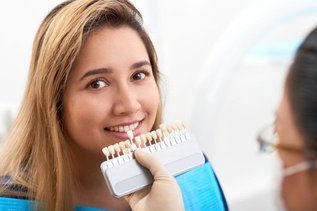
The clinic's porcelain process is built around that lab step. Impressions and the shade come first. A small amount of enamel is buffed from the front of each tooth, so the added thickness does not look bulky. A temporary covers the tooth while the lab makes the facing. At the next visit, the temporary comes off, and the facing is bonded. That sequence is about two appointments when nothing else is wrong with the tooth.
"The number on a website is not a quote. I need to see how many teeth show in your smile, whether the enamel is sound, and whether a cavity or a gum problem has to be handled before a veneer is even an option," says Dr. Christine Yoo, DDS, Mapleridge Smile Centre .
How Many Teeth Are in the Plan
Veneers are priced per tooth. Two porcelain teeth are about $2,260 to $4,760, and two composite teeth are about $920 to $2,060, because you are buying two facings, not a special small-case rate. The count that matters is the teeth that show when you talk and smile, plus any neighbour that would look wrong if it stayed the old colour or shape.
A full set is not a full mouth. Back teeth chew. They are rarely a good place for a thin front facing. The usual plan is to restore the upper teeth that show, and sometimes the lower teeth as well. Six, eight, or ten teeth come up often because that is how many teeth show in a relaxed smile. Six porcelain teeth at $1,130 each is about $6,780. Ten porcelain teeth at $2,380 each is about $23,800. Those figures are the per-tooth range times the count. They are not a package you are required to buy.
Treatment That Has to Come First
A veneer bonds to sound enamel. Treat decay, a leaking filling, or a crack that reaches the dentin first. Gum inflammation is treated first because a shell can't seat accurately on a bleeding margin, and the edge will show if the gum later shrinks. That preparatory care is dentistry in its own right. It belongs on the quote as its own lines, on top of the $1,130 to $2,380 or $460 to $1,030 facing.
A tooth cracked into the dentin, or mostly filling, often needs a dental crown rather than a shell on the front. A crown covers the whole tooth and protects what is left. A veneer does not. Switching one tooth from a veneer to a crown changes the fee, the preparation, and how the neighbouring shells are matched. It is better to know that before the first appointment, not after the enamel is already gone.
Shade matching can add a step as well. Whitening gel does not change porcelain or resin. If you want the natural teeth lighter, that whitening happens before the lab picks a colour. Doing it afterward leaves the new shells looking dark next to the bleached enamel. The whitening fee is separate. So is a night guard if you clench, because a new facing on a grinding bite is a facing that chips.
A written quote is easier to trust when it names the same items every time. Before you book the preparation visit, the treatment plan you sign should settle these points.
- The material on each tooth, porcelain or composite resin, and the dollar amount for that tooth.
- The exact teeth, so a full set cannot quietly become every tooth in the mouth.
- Fillings, gum care, and whitening as their own lines, not folded into one round number.
- The temporary, including what happens if it comes off before the bonding visit.
- A night guard if you grind, and whether that guard is part of this fee or a later one.
If two offices give you two totals, compare those lines before you compare the totals. The lower total isn't the better plan if it leaves out the filling, the temporary, or the guard. The higher total isn't the more thorough plan if it adds healthy teeth you didn't ask to change.
Why Porcelain Veneers Cost More Than Composite
Porcelain veneers cost about $1,130 to $2,380 per tooth because a laboratory technician builds the ceramic between two visits, while composite resin is layered and polished in the chair at about $460 to $1,030. Ceramic keeps a smooth surface longer, and a chip in it is more likely to mean a new facing. Resin is easier to repair in one visit, so the choice is a higher start with fewer colour changes, or a lower start with more maintenance.
What the Lab Fee Is Paying For
The lab is not a middleman adding a mystery markup. The technician copies the length, edge, and colour of the neighbouring teeth, or builds a new shape you and the dentist agreed on from a preview. A single shade of white, with no translucency at the edge, looks flat in daylight. Layering takes time, and that time is included in the $1,130 to $2,380 porcelain fee.
The temporary is part of the same stretch of treatment. After the enamel is reduced, the tooth can be sensitive to cold, and the temporary holds the space so the gum does not close over the margin. If you are covering several teeth, the temporaries also let you live with the length and the shape before the ceramic is final. Speaking and smiling for a week in temporaries is a useful test. That is also why the porcelain path takes two visits rather than one.
What Composite Veneers Cost in Chair Time
Composite veneers cost about $460 to $1,030 per tooth at the start because the dentist places the material in the chair and usually doesn't send it to a lab. The dentist still needs time. A facing on one chipped corner may take well under an hour. A facing that changes the colour and the length of several teeth takes much longer, and the fee rises with that time. You are paying for hands and for the resin, not for a kiln.
Resin can often be added with little enamel removed, and sometimes with none, when the job is to fill a small chip or close a narrow gap. That is closer to bonding than to a full porcelain facing. It is a real option when the tooth is healthy, and the change is small. It is a poor option when you want a large colour shift that has to stay stable for years, because resin stains and the surface dulls.
| Factor | Porcelain | Composite resin |
|---|---|---|
| About per tooth | $1,130 to $2,380 | $460 to $1,030 |
| Where it is made | In a dental lab | On the tooth, in the chair |
| Visits | Often two, with a temporary | Often one visit |
| Stain | Glaze resists stain until it wears | Resin can darken |
| Enamel removed | A thin layer on the front | Often less, sometimes none |
| If it chips | Often remade | Often repaired in the chair |
| Typical job | Colour and shape meant to stay stable | A small chip or a short-term change |
A small chip on one front tooth is a composite or bonding job, often inside the $460 to $1,030 band. A set of dark, uneven teeth that must hold their colour is a porcelain job, typically $1,130 to $2,380. Mixing the two on neighbouring teeth often looks mismatched within a couple of years, because the materials age apart.
What a Full Set of Veneers Includes
A full set of veneers means the teeth that show in your smile, not a mandate to cover molars. Six to ten porcelain teeth cost about $6,780 to $23,800, and the same count in composite costs about $2,760 to $10,300. A smile makeover may place shells on the teeth that show and use other treatment on the teeth that don't, and each step has its own fee.
The Teeth People Actually See
Stand in front of a mirror and say a few sentences. The teeth that show are the ones your face will change in everyday life. A wide smile shows more. A quiet smile shows fewer. If your lip hides your lower teeth, resurfacing all of them does little for how you look when you talk. If a lower tooth is the one that chips against an upper tooth, that lower tooth may belong in the plan even though it rarely shows.
Two Front Teeth Are Not a Full Set
Two front teeth are the case people ask about first, and two porcelain facings are about $2,260 to $4,760. One is chipped, or both are darker than the rest after an old injury. Treating those two and leaving the others is the right plan when the neighbours match in colour and length. The fee is two units plus any internal repair the injured tooth needs, not a full-smile package.
It becomes the wrong plan when the side teeth are a different yellow, or when the two new facings are wider than the teeth nature gave you. Two bright rectangles in the middle of a natural smile are easy to spot. Widening the plan by two teeth on each side can look calmer, and it costs more, because four extra porcelain shells can add another $4,520 to $9,520. Whitening the side teeth, then matching the two facings to that new shade, can cost less than four extra shells. The exam is where those two paths get priced side by side.
Are Veneers Covered by Insurance?
Most of the time, a veneer isn't covered because a change in colour or a small gap is classified as cosmetic. A broken corner is sometimes treated more kindly, and even then the plan may pay only part of a basic restoration and leave the ceramic to you. The only reliable check is a predetermination sent before the tooth is prepared, because a spoken estimate is not a promise from the insurer.
The Canadian Dental Care Plan
The Canadian Dental Care Plan pays toward a defined list of oral health services for eligible people. Veneers are not on that list. The federal benefits guide lists veneers in composite or ceramic as services that are always outside the plan, along with cosmetic treatment, including teeth whitening. An exception request is not a realistic path for a ceramic facing. The guide describes exceptions as extremely rare, and a veneer is an exclusion, not a missing code.
Private Plans and OHIP
A private plan from work follows the contract, not a provincial average. Some plans have a small cosmetic rider. Many have none. Annual maximums still apply to the part they do pay, and a veneer case can use a whole year of maximum on one or two teeth. If you have other work due, such as a crown or gum care, the order of claims in that benefit year is worth planning. Using the maximum on an excluded cosmetic code is a waste. The usual split is using it for covered disease treatment and paying for the veneer yourself.
OHIP does not cover dental services provided in a dentist's office . Because a veneer is placed in the office, OHIP does not pay for it. OHIP covers only a narrow range of dental services: eligible dental surgery in hospital, such as fracture repair, tumour removal, reconstructive surgery, and medically necessary tooth removal with prior approval. None of that is a veneer visit. A hospital card will not reduce a fee of $1,130 to $2,380 per porcelain tooth.
Are Veneers Expensive Next to Other Options?
Veneers are expensive when a simpler treatment would solve your actual problem, and they are a fair cosmetic fee when colour or shape will not change any other way. A cheaper option costs less because it does less. Whitening does not change shape, bonding stains more readily, aligners do not recolour a dark tooth, and a crown removes more tooth, not less.
When Whitening or Bonding Is the Smaller Job
Professional teeth whitening lightens natural enamel and does not change the colour of a veneer, crown, or bonding already in place. If your teeth are a colour you dislike and the edges are intact, whitening matches the problem. You can do it in the office or at home with trays. It is not a rehearsal for veneers unless the colour still fails after the enamel has been lightened.
Bonding repairs a small chip or a tiny gap with resin, usually in one visit, with little or no drilling. It is the right smaller job when one corner is missing, and the rest of the smile is fine. It stains, and the edge can wear. For that limited problem, replacing a bond every so often still costs less than a set of porcelain at $1,130 to $2,380 a tooth. Stretching bonding across six teeth to imitate a porcelain case is where the savings disappear and the maintenance piles up.
When the Teeth Are Crooked or Broken
Invisalign clear aligners move teeth. A veneer only covers the front. A facing can disguise mild rotation, but the tooth is still crooked underneath. Moderate crowding, a crossbite, or a gap that is really a missing tooth is a poor job for shells. Aligners, and sometimes a bridge or an implant, belong in that conversation. Aligners can also come first, so veneers bond to teeth that already sit in the right place. That sequence costs more than veneers alone, but less than veneers that chip because the bite was never corrected.
A broken tooth with a large filling, or a tooth that has already had a root canal and is dark and brittle, may need full coverage. The facing will not hold the walls together. This is where the plan shifts from cosmetic shells to restorative dentistry, with a different fee and a different amount of tooth removed. Doing a veneer there, because it sounds lighter, can mean a fracture and a crown a year later.
How Monthly Payments Change the Decision
A monthly plan does not change the dentistry. It changes when you pay. Dental financing through Beautifi can split a veneer plan into monthly payments at Mapleridge Smile Centre. You apply online. The clinic says the application takes less than three minutes, the result appears right away, and applying does not affect your credit score. A Beautifi specialist then calls to confirm the details, and Beautifi pays the clinic. You repay Beautifi on the term you accept.
The figure that matters is the total you will repay, including any interest the approval actually shows. A low monthly number can hide a long term on a case of $6,780 to $23,800. Ask for that total in writing next to the dental quote, and compare it with paying the dental fee in full. If the two are far apart, the financing is a real cost, not a courtesy. The rate sits on your approval, not on a standard clinic price.
The clinic's financing list includes aligners, implants, and other procedures. Confirm that your own veneer plan is included before you rely on the monthly figure. Keep the dental quote and the loan terms as two documents, so a monthly figure cannot hide which teeth are being treated.
What Shortens the Life of a Veneer
There is no single lifespan to put on a quote. A facing lasts as long as the bond stays sealed, the edge stays clean, and the bite doesn't snap the ceramic or the resin. Replacement is part of the real cost, so a composite fee of $460 to $1,030 is not automatically cheaper than porcelain at $1,130 to $2,380 once a stained facing has to be made again.
Grinding, Ice, and the Edges
The edge of a front tooth is thin. A veneer on that edge is thin, too. Night grinding pushes the lower teeth into the upper edges for hours, with more force than a meal. A night guard spreads that force. It is a separate appliance, not a cosmetic extra. Skipping it because it was not in the veneer package is a common way to crack a new facing in the first year.
Stain, Gums, and the Margin
The margin is the line where the facing meets the tooth, usually near the gum. Plaque left there can stain resin and decay enamel on either material. Brushing, flossing, and a professional cleaning still apply after the smile looks finished. A veneer is not a seal against neglect. Gum recession, from brushing too hard or from gum disease, exposes the edge and sometimes the darker tooth underneath. That line is hard to hide without replacing the facing or treating the gum.
A thin layer of enamel is removed for a typical porcelain facing so the added shell is not bulky. That layer does not grow back. The tooth will need a facing, or some other covering, from then on. Composite that is added without reduction is the exception, and it is reserved for small changes. Going into a porcelain case without understanding that the preparation is one-way is the regret people describe later, not the fee itself.
"A veneer asks you to give up a thin layer of enamel, and that layer does not grow back. I only plan one when the tooth is healthy enough to hold it, and I talk about a night guard when the bite is heavy," says Dr. Amir Guorgui, BSC, DMD, MACSD, Mapleridge Smile Centre .
The Fee Follows the Teeth You Actually Treat
How much you pay follows the material, the teeth in the plan, and the work those teeth need first. Porcelain is about $1,130 to $2,380 a tooth and adds a lab and a second visit. Composite is about $460 to $1,030 a tooth, keeps more of the fee in chair time, and asks more of you later in polish and replacement. Two front teeth (the teeth that show) and a full mouth are three different plans, and most people mean only the first two when they ask about veneers.
Insurance will not erase the fee. The federal dental plan excludes this treatment. OHIP does not pay for in-office dentistry. A private plan may contribute when a tooth is broken, and it may contribute nothing when the goal is colour. A predetermination before anyone buffs enamel is the step that keeps a surprise off the bill.
The enamel choice sits under the price. A facing can look natural and resist stain, and it still removes a layer that will not return. Grinding, hard food, and a dirty margin shorten whatever material you pick. A guard, a cleaning schedule, and a quote that names every tooth are the practical parts of a result you still like in a few years.
Mapleridge Smile Centre in Maple can plan porcelain veneers for the teeth that show when you smile, and can separate that fee from any filling, gum care, or whitening that has to come first. Bring the tooth count you actually want changed, and ask for the lines in writing before the preparation visit.
Frequently Asked Questions
Are veneers worth the money?
They are worth a fee of about $1,130 to $2,380 per porcelain tooth when the colour or the shape will not change with whitening or bonding, and you accept that a thin layer of enamel is removed. They are a poor buy when bleach would lift the stain, or when the teeth are crooked and should be moved. Composite starts at about $460 to $1,030 per tooth and requires more maintenance later.
How long do teeth veneers last?
There is no single lifespan. Grinding, ice, nail biting, and a leaky edge shorten them. Porcelain holds its colour longer than composite resin when the glaze stays intact. Ask what your own bite is likely to do, and treat a future replacement as part of the cost.
What is a cheaper option than veneers?
Whitening, if the shape is already fine. Bonding, if one corner is chipped. Clear aligners, if the teeth are crooked. Composite veneers, about $460 to $1,030 per tooth, cost less up front than porcelain, about $1,130 to $2,380. None of the smaller options copies a custom ceramic shell.
Does OHIP cover veneers?
No. OHIP does not pay for dental care provided in an office, and veneers are an office procedure. Hospital dental surgery, such as fracture repair or a medically necessary extraction, is a different benefit. It does not reduce a veneer fee.
How much is a full set of veneers?
A full set is the per-tooth fee times the teeth that show in your smile. Six to ten porcelain teeth are about $6,780 to $23,800, and the same count in composite is about $2,760 to $10,300. There is no fixed package. The quote should list the teeth.
Do veneers damage your teeth?
A typical porcelain facing requires removing a thin layer of enamel from the front, and that enamel does not grow back. A healthy tooth can hold the shell. We treat decay, deep cracks, or gum disease first. A tooth that is mostly filling may need a crown instead.
How many appointments does a porcelain facing take?
When the teeth are already healthy, the porcelain path is about two visits. The first visit records the shade, removes a small amount of enamel, and places temporaries. The next visit bonds the lab-made facings. Fillings, gum care, or whitening add visits before that.
Can whitening change the colour of a veneer?
No. Whitening gel works on natural enamel. It does not change porcelain or composite resin. If you want the shells to match a lighter shade, whiten the natural teeth first, then match the facings to that colour. Whitening afterward leaves the shells looking darker than the enamel beside them.
