
Dr. Amir Guorgui completed his dental education at the University of Montreal in 2001. He holds a prestigious Mastership designation at the College of Sedation, a recognition of his unwavering dedication to delivering top-notch sedation services to his patients. As an esteemed member of the Vaughan community, Dr. Guorgui takes great pleasure in connecting with his patients and imparting valuable knowledge about their oral health.
Foods That Can Damage Your Dental Crown: What to Skip
Sticky, hard, and sugary foods can damage your dental crown, and a temporary crown is the most likely to come off. Caramel, ice, popcorn kernels, and a whole apple are common culprits. A final crown is stronger, and it can still chip or let decay start at the edge if those habits continue.
A temporary crown is the cover placed while the final one is being made. The cement is meant to come off at the next visit, so gum, toffee, and a hard bite can lift it. A porcelain crown finished in one visit does not have that temporary stage, and porcelain can still chip if you chew ice or bite something hard.
Practical tips include which foods and drinks cause trouble, how to keep fruit and vegetables in the meal, and what to do if a crown comes off at the table. Softer meals are easier while a new crown settles. Everyday eating also affects how long the tooth's edge stays sound.
Key Takeaways
- Foods that can damage your dental crown are sticky, hard, or sugary, and temporary crowns fail first.
- Caramel, chewing gum, taffy, and sticky granola bars can pull a temporary crown off the tooth.
- Ice, hard candy, nuts, and popcorn kernels can chip a crown or crack the tooth under it.
- Sugar does not crack the crown. It feeds decay at the edge, where the crown meets the tooth.
- Cut apples, carrots, and corn off the cob, and chew on the other side while a temporary is in place.
- If a crown comes off, do not use household glue. Keep the crown and call the clinic the same day.
Find our Dental Clinic Near You
Foods That Can Damage Your Dental Crown
The short list includes sticky, hard, and sugary foods. Crunchy produce sits with the hard group when you bite it whole. A porcelain crown can be finished in a single visit, and in that case there is no temporary to protect. When the final crown is made at a later visit, the temporary is the weak point, and the foods below are the ones to skip until then.
Use the table as a filter before a meal, not as a ban on every food in the house. The notes under it say which row matters most for a temporary crown and which still matters years later.
| Food type | What it does to the crown | Examples |
|---|---|---|
| Sticky | Can pull the crown off, especially a temporary crown | Caramel, chewing gum, taffy, gummy candy |
| Hard | Can chip the crown or crack the tooth under it | Ice, hard candy, nuts, popcorn kernels |
| Sugary | Feeds decay where the crown meets the tooth | Soda, candy, sweetened cereal |
| Crunchy | Puts a sharp load on one edge of the crown | Raw carrots, a whole apple, crusty bread |
Sticky Foods
Sticky foods are the ones that grab. Caramel, taffy, toffee, gummy candy, chewing gum, and a granola bar that clings to your fingers can cling to a crown the same way. A temporary crown is held with cement that should release at the next visit. A strong pull can release it early. A final crown is cemented to stay, and a very sticky sweet can still tug at the edge if the cement has started to wash out.
The practical test is simple. If food sticks to a fork or your fingers, don't chew it on the crowned tooth. That includes dried fruit, which feels like a healthy snack and behaves like candy once it is in the teeth. Fruit leather does the same thing. A soft banana does not.
Chewing gum is a special case because people keep it in the mouth for a long time. One chew is a pull. Twenty minutes is a series of pulls. Skip gum while a temporary is in place. After the final crown is on, gum is still a poor idea if the crown has ever felt loose.
Health Canada's dietary guidelines note that confectioneries, including candies, candy bars, fruit leathers, chocolate, and chocolate-coated treats, can be sticky and adhere to teeth, increasing the risk of dental decay . A sweet that is both sticky and sugary does two jobs at once. It pulls on the crown, and it sits on the tooth. Caramel is the clearest example. Dried fruit is the one people forget: it is sticky and often adheres to teeth , and its sugars can contribute to decay. If you eat it, have it with a meal, not as an all-afternoon snack.
Hard Foods
Hard foods break things. Ice, hard candy, nuts, and a popcorn kernel that isn't fully popped are foods people name after a crown chip. Do not chew ice. Do not use your teeth to open a package, bite a pen, or tear a bag. A pen cap, a bottle lid, a fingernail, and a plastic tag on clothing are the same kind of load as the ice. The crown is not a tool.
Porcelain can chip more easily than a metal crown. A chip on a front tooth shows. A chip on a molar can leave a sharp edge that cuts the tongue and a gap where food packs in. Nuts are not banned forever. A soft nut butter is a different food from a whole almond you crack with the crowned side. Popcorn is the trap people miss, because the fluffy part is soft and the unpopped kernel is not. If you eat popcorn, do not bite down on a kernel you can hear.
A temporary crown is higher risk because the material and cement are both meant to be short-term. A final crown is not a licence to chew ice. Chewing ice is a habit that chips natural teeth too. The crown did not make the habit safe.
"Hard foods are hazardous immediately after crown placement. The cement is still curing, and bite alignment may not be fully adapted," says Dr. James C.H. Ko, DDS at Mapleridge Smile Centre .
Hard bread crust, a toasted bagel, and a pizza crust fall into this group when you tear them with your front teeth. Cut them. The food is fine. The lever of a front-tooth bite is the problem, especially in the first days, when you are also learning the new shape of the tooth.
Sugary Foods
Sugar does not snap a crown the way ice does. It feeds the bacteria that make acid, and the acid attacks the tooth at the crown's edge. That edge is where a cavity can start under a crown that still looks fine from the front. Soda, candy, sweetened cereal, and frequent sips of a sweet drink are the pattern that keeps acid on the tooth.
You don't have to cut out every dessert. What matters is how often the sugar is in the mouth. A sweet once in a while, eaten with a meal and followed by water, is a different exposure from sipping soda all afternoon. Brush with a fluoride toothpaste twice a day and floss, including along the edge of the crown. The crown itself does not decay. The tooth under the edge can.
Sweetened cereal is a morning trap because it is easy and it sticks in the grooves of the teeth next to the crown. Rinse after, and don't leave milk sitting sweet in your mouth on the way out the door. A handful of candy at a desk, one piece every few minutes, is worse for the edge than the same candy eaten once and finished.
Drinks That Cause Trouble Around a New Crown
What you drink matters for two different reasons. Acid and sugar sit on the edge of the crown. Very hot or very cold drinks can make a freshly prepared tooth ache, because the tooth under a new crown is often sensitive. Sensitivity is not the same as a loose crown. Pain that gets worse, or a crown that rocks, is a call to the clinic. A zing from ice water in the first few days is common and worth mentioning at the next visit if it doesn't settle.
Drinks to treat with care:
- Soft drinks, energy drinks, fruit juice, and sweetened coffee or tea, because the sugar stays on the teeth if you sip them.
- Cola and other acidic drinks, which add acid on top of the sugar.
- Red wine and dark cola if you have a temporary crown, because it can stain before the final crown arrives.
- Ice-cold drinks if the tooth zings. Let the drink warm a little, or skip the ice.
Water is the drink that does not do this. Milk is a reasonable choice with a meal. Herbal tea that is not very hot is easier than a boiling coffee on a tooth that was prepared yesterday. If you do have a sweet or acidic drink, have it with food, finish it, and rinse with water. Do not nurse it for an hour.
A straw does not fix a sticky or hard food, and it does not replace a rinse. It can keep a dark drink off a temporary crown on a front tooth, which matters if you have a wedding or a photo before the final crown is ready. The useful habit is still to keep sweet drinks short and to brush the edge of the crown before bed.
Sparkling water is a mild acid for some people and a non-issue for others. If the crowned tooth zings when you drink it, switch to still water for a few days and mention it at the next visit. Do not use the zing as a reason to avoid every cold drink forever. A short period of sensitivity is common. A zing that is getting worse is not.
How to Eat Fruit and Vegetables With a Crown
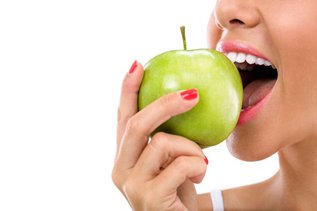
Apples, carrots, celery, corn on the cob, and a hard pear are good foods. The problem is the bite, not the food. Biting into a whole apple puts the full force on one spot. If that spot is a new crown or a temporary, the crown can crack, lift, or feel high afterwards. The same bite on a crusty heel of bread or a raw carrot stick does the same thing.
You can keep these foods. Change the way they meet the tooth.
- Slice apples, pears, and other firm fruit. A thin slice is a chew, not a crack.
- Cut carrot and celery into small pieces, or cook them until a fork goes through.
- Cut corn off the cob. The cob is a lever against the crown.
- Choose softer fruit while a temporary is in place: banana, berries, a ripe peach, canned fruit in its own juice rather than syrup.
Chew on the other side until the final crown is cemented and the dentist has checked the bite. That instruction is easy to forget at dinner, when you reach for the crowned side out of habit. Put the food on the tongue and move it. If you catch yourself biting with the new crown, stop and switch sides. A few days of attention prevents a weekend with a crown in a napkin.
Once the final crown has been in place and the bite feels even, firm fruit can come back, sliced if you are unsure. A whole apple is still a hard bite. Many people with a molar crown go back to normal chewing and simply skip ice and hard candy. That is a reasonable long-term rule. The temporary period is stricter than the years after.
Meals That Are Easier While a Crown Settles
The first days are when people either protect the crown or knock it off at dinner. You do not need a special diet. You need food that doesn't pull or crack.
Breakfast is the meal people get wrong because they are in a hurry. Skip granola that clumps, untoasted hard bread, and a whole apple on the way to the car. Eggs, yogurt, oatmeal, a smoothie you drink rather than chew, and soft fruit are simpler. If you want toast, let it cool and do not bite the crust with the crowned tooth.
Lunch at a desk is usually a sandwich. The risk is a hard roll and a sticky protein bar as the second course. Choose a softer bread, cut the sandwich, and leave the bar for another week if it clings. Soup, rice, pasta, and fish are easy. A bag of chips is a hard crunch on one tooth. If you have chips, do not park them on the new crown.
Dinner can stay normal if you change how you cut your food. Cut meat off the bone instead of pulling it with your teeth. Slice anything you would otherwise bite. A burger is fine if you cut it. If you tear a burger with a front crown, the temporary comes off in the napkin.
Snacks are where sticky and sugary foods sneak back in. Cheese, hummus, a peeled orange in segments, and yogurt do not pull a temporary off. Gummy vitamins do. If you take them, let them dissolve rather than chew them on the crowned side, or ask whether a non-gummy form exists. That small swap matters more than people expect, because the vitamin is sticky and it happens every day.
If you are feeding children at the same time, their snacks are often the ones that end up in your mouth: a fruit leather, a handful of their popcorn, a bite of a hard granola bar. Those are the same foods. The crown doesn't know it was someone else's snack.
Eating Out, Travel, and the First Two Days
Restaurants are where the rules slip, because you didn't cook the food and you don't want to send it back. You can still eat. You order, and you cut.
- Ask for dressings and sauces on the side if they are very sticky, such as a thick caramel or a glaze you would chew.
- Cut steak, crusty bread, and anything on the bone. Do not tear it with the crowned tooth.
- Skip the popcorn appetizer and the hard candy that comes with the bill.
- If you have a temporary on a front tooth, dark sauces and red wine can stain it before the final crown is ready. A lighter meal for one dinner is a smaller problem than a grey temporary in every photo that week.
Travel is the same list in a worse setting, because you cannot be seen the same day if the crown comes off in another city. Pack a small container in case it does. Chew on the other side on the plane, where sticky bars and hard pretzels are the snacks on offer. If you are gone for the week the temporary is supposed to last, tell the clinic before you leave. A temporary that was meant to survive a few quiet days at home is a weak plan for a trip full of restaurant meals.
The first two days are the ones to be dull about. The tooth can be sensitive, the bite can feel new, and the cement on a temporary has not been tested yet. Soft meals, water, and chewing on the other side are enough. You are not proving the crown by eating the hardest thing in the kitchen. If the bite feels high, as if one tooth hits first, call. A high bite is an adjustment. Waiting on it is how the tooth bruises and the temporary rocks loose.
People also test a new crown with ice "to see if it works." Cold sensitivity in the first days is common and does not mean the crown failed. Ice as a chew is still a chip risk. Drink cool water to see whether the zing is settling. Do not crunch the ice afterward.
If the Crown Comes Off at the Table
Stop chewing on that side. Take the crown out of your mouth so you do not swallow it or bite down on it. Rinse it gently if you can, and put it in a small container, not a napkin you'll throw away. Look at the tooth in a mirror. If the tooth is sharp, bleeding, or very painful, you need care the same day, even if you cannot find the crown.
Do not use household glue, denture adhesive, or superglue as a permanent fix. Those products are not made for a tooth, and they can damage the crown so it cannot be recemented. A pharmacy cement sold for loose crowns is a short-term bridge until you are seen, and only if the tooth is not painful and the crown fits back on without forcing. Forcing a crown that does not seat will hurt and can crack the tooth. If it does not slip back on easily, leave it off and bring it with you.
Call Mapleridge Smile Centre in Maple the same day. In most cases, we can see a lost crown that day, and we would rather recement a crown you kept than start again because it was left in a napkin. The clinic is on Keele Street in Maple, for patients in Vaughan and Maple.
Until you are seen, chew on the other side, skip sticky and hard foods, and keep the area clean with a gentle brush. The exposed tooth can be sensitive to cold. That sensitivity is a reason to be seen, not a reason to wait a week. If the crown was a temporary, the final visit may still be on the calendar, and you may need a new temporary in the meantime. If the crown was the final one, bring it. An intact crown on a sound tooth is often a recement. A cracked crown, or a tooth with decay underneath, calls for a new plan.
How Everyday Eating Changes How Long a Crown Lasts
A crown does not fail only on the day you eat caramel. The edge is a seam. Food, acid, and plaque sit there every day. Floss has to pass that seam, not skip it because the contact feels tight. A water flosser can help, and it does not replace floss if the contact is where the decay starts. Brush twice a day with fluoride toothpaste. Spit, and do not rinse the fluoride away immediately if your dentist has asked you to leave it.
These habits protect the tooth, not just the cap. "A crown acts as a second chance for a tooth that would otherwise need extraction. It provides structural support and prevents further breakdown," says Dr. Amir Guorgui, BSc, DMD, MACSD, dental surgeon and founder of Mapleridge Smile Centre .
Teeth cleaning removes tartar a brush can't reach, including near the edge of a crown. At those visits, we check the crown: the bite, the edge, and whether the gum is puffy beside it. Skipping a visit because the crown "feels fine" lets decay under the edge grow before anyone notices.
Grinding at night puts a different load on your teeth than food does. If you wake with a sore jaw, or the crown feels high only in the morning, tell the dentist. A hard bite while you sleep can chip porcelain like ice. That is a conversation about the bite, not about giving up fruit.
Stain is mostly a temporary-crown problem. Coffee, tea, red wine, curry, and dark berries can colour a temporary before the final crown arrives. The final porcelain crown does not stain the way a temporary does, and the edge of the natural tooth can still pick up stain if plaque sits there. Rinsing with water after coffee is enough for most people. You do not have to give up coffee for the life of the crown.
If a crown needs to be replaced, we explain the fee before treatment. Mapleridge Smile Centre follows the Ontario Dental Association fee guide, not the Canadian Dental Care Plan's reduced fee schedule. You are responsible for any co-payment and for the fee difference, and that difference is due at the time of the appointment. Sun Life bills eligible treatment directly. A crown placed only to change the look of a healthy tooth is not something to assume a plan will cover. Beautifi offers dental financing if you need to pay a replacement over time. The application takes less than three minutes; it does not affect your credit score, and the result shows instantly.
What to Skip, and What to Keep
The foods that damage a crown are sticky, hard, or sugary, and a temporary crown is the one that comes off first. Caramel, gum, ice, unpopped popcorn, and a whole apple are the repeats. Sugar works more slowly, at the edge, which is why a crown can look fine and still need to be replaced years later.
You can keep fruit, vegetables, and normal meals. Slice the hard ones, chew on the other side while a temporary is in place, and finish sweet drinks instead of sipping them. If a crown comes off, save it and call the same day. Do not glue it with anything from a kitchen drawer.
Mapleridge Smile Centre in Maple can recement a crown you kept, or plan a replacement if the tooth underneath has changed. Book an appointment the day it happens, including when you are in Vaughan and the crown comes off at dinner.
Frequently Asked Questions
What foods should I avoid with a temporary crown?
Skip caramel, taffy, gum, gummy candy, and sticky granola bars, because they can pull the temporary off. Skip ice, hard candy, nuts, and popcorn kernels, because they can crack it. Cut apples and raw carrots instead of biting them whole, and chew on the other side.
Can I eat popcorn with a dental crown?
The fluffy part is soft. The unpopped kernel is hard enough to chip a crown or crack the tooth under it. If you eat popcorn, do not bite down on a kernel. While a temporary crown is in place, it is simpler to skip popcorn entirely.
Does sugar break a crown?
Sugar does not snap the crown. It feeds decay at the edge, where the crown meets the tooth. Sipping soda or eating sticky sweets is often riskier than eating a dessert once with a meal and then drinking water.
Can I drink coffee with a new crown?
Yes, with care. Very hot coffee can make a freshly prepared tooth ache. Coffee can also stain a temporary crown. Let it cool a little, then rinse with water. A final porcelain crown does not stain the way a temporary does.
What should I do if my crown comes off while I am eating?
Remove it, rinse it, and keep it in a container. Do not use household glue. Call the clinic the same day. If it slips back on without force and the tooth is not painful, leave it there only until you are seen. If it does not fit, bring it in your hand.
How long should I chew on the other side?
Chew on the other side while a temporary crown is in place, and for a short time after the final crown is cemented if the tooth is sensitive. Once the bite has been checked and feels even, most people return to chewing on both sides and simply avoid ice and very hard candy.
Are gummy vitamins a problem for a crown?
They are sticky, and chewing them daily on the crowned side creates repeated pulling, especially on a temporary. Let them dissolve, move them to the other side, or ask about a swallowable form. The vitamin is not the issue. The stickiness is.
