
Dr. Amir Guorgui completed his dental education at the University of Montreal in 2001. He holds a prestigious Mastership designation at the College of Sedation, a recognition of his unwavering dedication to delivering top-notch sedation services to his patients. As an esteemed member of the Vaughan community, Dr. Guorgui takes great pleasure in connecting with his patients and imparting valuable knowledge about their oral health.
All-on-X vs All-on-4: How Full Arch Dental Implants Have Evolved and Why All-on-X Delivers More
All-on-X and All-on-4 both replace a full arch of missing or failing teeth with a fixed set of new teeth held in place by dental implants, but they are not quite the same. All-on-4 follows a set formula of four implants per arch. All-on-X keeps everything that made All-on-4 so successful and removes the fixed number, so the treatment uses however many implants your mouth actually needs, most often four, five or six, chosen from a fully digital plan built around your bone, your bite and your goals. In practice, this means All-on-X can offer more precise planning, stronger support for the new teeth and a result matched to you rather than to a formula, while still giving many patients a complete set of fixed teeth in a single day. For most people weighing the two, All-on-X is simply the more modern, more customized version of the same life-changing idea.
Mapleridge Smile Centre now offers All-on-X full-arch implant treatment , using digital scanning, 3D imaging, and in-house planning to design each smile before treatment begins. That means your approach is chosen specifically for your mouth, not pulled from a one-size-fits-all template, and delivered by an experienced surgical team under one roof.
Key Takeaways
- All-on-4 replaces a full arch of teeth using four implants, while All-on-X uses the number your mouth needs, usually four, five or six.
- All-on-X is the more customized, digitally planned evolution of All-on-4, not a completely different procedure.
- Both can give many patients a fixed set of teeth in a single day, with no removable dentures and no adhesive.
- A digital workflow with CBCT and 3D scanning lets you design the smile before surgery, adding precision and saving time.
- Age is rarely a barrier, and bone loss is often manageable, because implants are planned around the bone you have.
- Mapleridge Smile Centre offers three levels of All-on-X treatment so the material and cost can be matched to each patient.
Find our Dental Clinic Near You
What Are Full Arch Dental Implants?
Full arch dental implants replace an entire row of upper or lower teeth at once. Instead of restoring each missing tooth individually, a small number of implants are placed in the jaw, and a single fixed bridge of new teeth is secured on top. It rebuilds a whole smile, not just one gap.
The implants themselves are small threaded posts that act as new tooth roots. Once they are placed, the bone gradually grows around them and locks them in, a natural process that gives the finished teeth their stability. According to the Cleveland Clinic , dental implants can last a lifetime with proper care, and unlike dentures or removable bridges, they do not need adhesive to stay in place. For the patient, that is the headline difference. Nothing slides, nothing clicks, and nothing has to come out at night.
For people who have lived with loose dentures, constant adhesive or a mouthful of failing teeth, this is often the moment things change. There are no removable plates and no glue, just a secure smile that feels and works much more like natural teeth. All-on-4 and All-on-X belong to the same treatment family, and understanding it makes the comparison much clearer.
From Many Implants to All-on-4: A Quick History
To understand why All-on-X matters, it helps to see how full-arch treatment has changed over the years, because the whole story is about doing more with less.
Years ago, replacing a full arch was a much bigger undertaking. It often meant placing eight to ten implants, adding bone grafting to build up the jaw, waiting through long healing periods and going through several separate surgeries. The results could be excellent, but the road to get there was long, involved and expensive. For many people, it simply felt out of reach, both in terms of time and cost, and a lot of patients put off treatment for years as a result.
Then came All-on-4, and it changed everything. By placing just four implants in carefully chosen positions and angles, dentists found they could support a full set of fixed teeth, and many patients could receive them the same day. Angled placement made the most of the bone people already had, often reducing or eliminating the need for grafting. Treatment became faster, more predictable and far more affordable. All-on-4 made full arch implants realistic for a much wider group of people, and it remains a proven, successful approach that clinics still use today with great results.
So What Is All-on-X?
All-on-X takes the proven idea behind All-on-4 and makes it flexible. The X simply stands for the number of implants, because that number is no longer fixed at four. It is less a brand-new procedure and more a smarter way of planning the same treatment.
Every mouth is different. Some patients do beautifully with four implants. Others benefit from five or six, depending on their bone volume, jaw shape, bite, and what they want from their new smile. Rather than fitting every patient into the same formula, All-on-X uses detailed digital planning to decide the right number and position of implants for each person. Reputable clinics have long acknowledged that even under the All-on-4 name, five or six implants are often used when a patient's anatomy calls for it, and All-on-X simply makes that flexibility the starting point rather than the exception.
The result is the same core treatment, delivered in a way shaped around you rather than a number. That is the heart of the difference, and it is why the rest of this article compares the two directly, aspect by aspect, so you can see exactly what changes and what stays the same.
All-on-X vs All-on-4: What Actually Differs?
The two approaches share the same goal and the same basic surgery. The real differences lie in flexibility, planning and how closely the final result is tailored to you. It is worth walking through each one.
The Number of Implants
All-on-4 always uses four implants per arch. All-on-X may use four, five, or six, depending on your anatomy. More implants aren't automatically better, and four well-placed implants can support a full arch beautifully. The advantage of All-on-X is the freedom to add support where your bone allows, which can improve stability when needed, such as in a lower jaw with heavy biting forces or for a patient who wants the most robust foundation possible. The plan drives the number, not the other way around.
Digital Planning and Precision
This is where modern All-on-X truly stands apart. The entire case is planned digitally before any surgery, so the position and angle of each implant and the shape of the final smile are worked out in advance. That planning brings more precision to the surgery itself and fewer surprises along the way, because the team already knows exactly what they are aiming for before they begin. It also lets the patient preview their new smile before treatment starts, which reduces uncertainty.
Treatment Time and the Same-Day Result
Both approaches can give many patients a fixed set of teeth in a single day, often called teeth in a day . With All-on-X, the digital workflow and in-house planning can shorten appointments and make the overall process more efficient, because much of the work is prepared ahead of time rather than done in the chair. That efficiency matters to patients who want to minimize time in the dental chair without sacrificing quality or precision.
Customization to Your Goals
All-on-4 is a single-set approach, which is part of what made it so accessible. All-on-X adds a layer of personalization on top of that accessibility. Because the plan is built digitally, it can account for not just your bone, but your bite, the look you want, and the long-term durability you want. Two patients can both have All-on-X and receive plans that differ in the number of implants and the materials used, each matched to their own situation. That is the practical meaning of "customized" in this context.
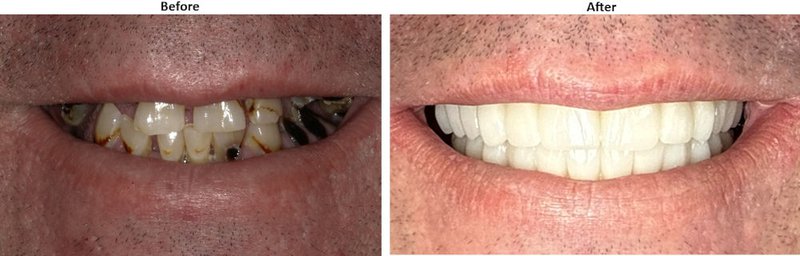
At a glance, here is how the two compare across the points that matter most to patients:
| All-on-4 | All-on-X | |
|---|---|---|
| Implants per arch | Always four | Four, five or six, based on your anatomy |
| Planning | Proven, established technique | Fully digital plan built before surgery |
| Customization | One set formula | Tailored to your bone, bite and goals |
| Same-day teeth | Often possible | Often possible, with an efficient digital workflow |
| Best thought of as | The breakthrough that made this realistic | The modern, customized evolution of it |
“The biggest shift with All-on-X is that we are no longer fitting the patient to the procedure. We plan the whole case digitally first, then decide how many implants each person actually needs and exactly where they should go. That is what lets us give someone a secure, natural-looking smile that is built specifically for their mouth, very often on the same day.” - Dr. Robert Eisen DDS, Mapleridge Smile Centre
The Technology That Makes All-on-X Possible
All-on-X can be so personalized because of the digital tools used to plan it. At Mapleridge Smile Centre, the workflow centers on a few key dental technologies that work together to turn a complex treatment into a clear, guided journey.
- A CBCT scan, which is a detailed 3D X-ray that shows the bone in your jaw so implants can be planned exactly where the support is strongest.
- An intraoral scanner, which captures a precise 3D picture of your mouth in minutes without the messy impressions of the past.
- Digital smile design, which lets the team design and preview your new smile on screen before any surgery.
- In-house 3D printing produces the temporary set of teeth on site, so the provisional smile can be ready quickly.
Planning a case this way delivers three things patients notice. First, more precision during surgery, because the team decides. Second, shorter and better-organized appointments, since much of the work is done before you are in the chair. Third, a final result that was designed on purpose rather than left to chance. For a treatment that once felt overwhelming, this kind of planning makes it predictable and easy to understand.
It is also the reason bone loss is far less of an obstacle than it used to be. Because the CBCT scan shows precisely how much bone exists and where, implants can be angled and positioned to make the most of it, often avoiding the extensive grafting older full-arch approaches required. That advantage opens the door for many patients who were previously told they weren't candidates.
Is All-on-X More Reliable Than All-on-4?
Reliability in full-arch implants comes from three things: good planning, well-placed implants, and a well-made set of teeth. Both All-on-4 and All-on-X are built on the same sound principles, and All-on-4 has a long, successful track record.
That track record is documented, not assumed. A longitudinal study published in the Journal of the American Dental Association followed 245 patients with All-on-4 restorations in the lower jaw and reported a prosthesis survival rate of 99.2 percent with up to 10 years of follow-up. A later study by the same research group extended the follow-up and reported a cumulative prosthetic survival rate of 98.8 percent at up to 18 years. Few dental treatments carry that depth of long-term evidence, and All-on-X builds on it.
Dental implants in general are a well-proven treatment. The Cleveland Clinic notes that implant-supported teeth anchor directly to the jawbone rather than resting on the gums, which gives them improved stability for chewing, eating, and speaking compared with traditional dentures. That stability is the foundation both All-on-4 and All-on-X are built on.
What All-on-X adds is the ability to fine-tune that reliability for each person. When the plan allows an extra implant or two where the bone supports it, the load on the new teeth can be shared more evenly, which many patients value for long-term peace of mind. Just as importantly, the surgical care and expertise are the same across every case. The differences between treatment levels come mainly from the materials used for the final teeth and their long-term durability, not from the quality of the planning or the surgery. In other words, All-on-X does not replace what made All-on-4 dependable. It builds on it and makes it adjustable.
How Is This Different From Traditional Dentures?
Many people considering full-arch implants compare them not just with each other but with dentures, because dentures are what they know. The difference is significant and worth spelling out.
Traditional dentures rest on the gums and rely on suction or adhesive to stay in place. Because nothing anchors them to the jaw, they can shift or rock while you talk or eat, and they often need adjustment over time. They also do nothing to slow the bone loss that follows tooth loss, which is part of why a denture that once fit can gradually become loose. Over the years, this can even change the shape of the lower face.
Full arch implants, whether All-on-4 or All-on-X, solve these problems at the root. Because the teeth are fixed to implants set into the jaw, they don't move, don't need adhesive, and don't come loose at night. The implants also stimulate the jawbone in a way that helps preserve it, much as natural tooth roots do. For most patients, this means being able to bite into foods they had given up on, speak without worrying about slipping teeth and stop thinking about their teeth throughout the day. It is the difference between managing missing teeth and genuinely replacing them.
“The thing patients tell us most often afterward is that they wish they had done it sooner. Once the teeth are fixed in place and they can eat and smile without a second thought, everything changes. That is really what this treatment is about. It is not just replacing teeth; it is giving people back their confidence and their quality of life.” - Dr. Robert Eisen DDS, Mapleridge Smile Centre
Cost and Treatment Options at Mapleridge Smile Centre
Because every patient has different goals and different budgets, Mapleridge Smile Centre offers three levels of All-on-X treatment. This is an important point to understand. Every patient receives the same careful digital planning and the same surgical expertise. The differences between the levels are in the restorative material and long-term options, not in the standard of care itself.
These three options let you match the treatment to what you want, whether that is a beautiful, functional smile at the most accessible price or the highest level of aesthetics and durability available.
| Option | Best for | Restoration material | From |
|---|---|---|---|
| Essential | Straightforward cases | PMMA hybrid restoration | $19,995 / arch (from $400/month*) |
| Core (most popular) | Great long-term value | Titanium-reinforced restoration | $24,995 / arch (from $465/month*) |
| Premium | Highest aesthetics and longevity | Full zirconia ceramic restoration | $29,995 / arch (from $594/month*) |
Financing options mean the monthly cost can start at a level many patients are pleasantly surprised by, which puts a fixed, permanent smile within reach for far more people than it used to be. The right option depends on your goals and your case, and the team walks through it with you in detail at your consultation rather than leaving you to figure it out on your own.
Is All-on-X Right for You?
All-on-X is designed for people missing many or all of their teeth in an arch, with failing teeth that cannot be saved, or who are tired of loose, uncomfortable dentures. If any of that sounds familiar, you may well be a candidate, even if you have been told otherwise in the past.
What About Age or Bone Loss?
You are rarely too old for this treatment. The Cleveland Clinic notes that while the typical minimum age is around 18, once you are done growing, there is no upper age limit for dental implants, and the main requirement is simply having enough healthy bone for the implant to anchor into. Bone loss, which stops some people from pursuing implants elsewhere, is often manageable, because the digital plan can position implants to make the most of the bone you have. This is exactly the kind of question the CBCT scan is designed to answer, and we review it carefully before recommending any treatment.
What the Journey Looks Like
For most patients, the path is straightforward and guided from start to finish. Knowing the steps ahead of time helps the process feel manageable, not daunting. It generally moves through these stages:
- Consultation to discuss your goals, review your options and answer your questions.
- A 3D scan and CBCT to map your mouth and bone in precise detail.
- Digital planning, where we design your new smile before any surgery begins.
- Surgery and same-day teeth, so you leave with a fixed provisional set of teeth.
- Healing, during which the implants bond with the bone.
- Your final smile, fitted once everything has settled and integrated.
At every stage, we explain the plan so there are no surprises. If you've felt overwhelmed by the idea of full arch treatment, seeing it broken down into clear steps is often reassuring.
What All-on-X Really Means for Your Smile
If you have been living with missing teeth, failing teeth or dentures that never quite feel right, the most important thing to take from this comparison is that you have options, and that those options are better than they have ever been. All-on-4 opened the door by making full-arch implants faster, more predictable, and more affordable, and it remains an excellent, proven treatment. All-on-X builds on that progress by planning each case digitally and using the exact number of implants your mouth needs, so the result is shaped around you rather than a formula. What that gives you is a fixed, natural-looking set of teeth that does not move, does not need adhesive and is very often placed in a single day, along with the freedom to eat, speak and smile without a second thought. If you're sitting at home wondering whether any of this is realistic for you, the honest answer is that a modern, customized solution likely exists for your situation, whatever you may have been told before. The only way to know what fits you best is to have a team assess your mouth digitally and show you your options clearly. That is precisely the approach Mapleridge Smile Centre was built to provide, and it is the real difference between hoping a formula works and knowing your new smile was designed, from the very first scan, around you.
Frequently Asked Questions
What is the difference between All-on-4 and All-on-X?
All-on-4 uses a fixed number of four implants to support a full arch of teeth. All-on-X uses whatever number your mouth needs, usually four, five or six, chosen from a digital plan built around your bone and goals. All-on-X is best understood as the more customized, digitally planned version of All-on-4, not a completely separate procedure. Both aim to give you a secure, fixed set of teeth without removable dentures or adhesive.
Does the surgery hurt?
The procedure is carried out so that you are comfortable throughout, and sedation options are available for patients who feel anxious. Most people are surprised by how manageable the experience is, and your team usually controls any soreness afterward with the aftercare guidance they provide. Because the case is planned in detail beforehand, the surgery itself is usually efficient and precise. Your team will explain exactly what to expect at every step so nothing catches you off guard.
Am I too old for dental implants?
Age alone is rarely a barrier. Healthy adults across a wide range of ages have full arch implant treatment successfully, and there is no upper age limit for implants once you have finished growing. What matters more than your age is your overall health and the amount and quality of bone in your jaw, both of which we assess before treatment. Many patients who assumed they were too old are pleased to learn they are good candidates after all.
What if I have bone loss?
Bone loss is common and often manageable. The CBCT scan shows exactly how much bone you have and where it is, so we can position and angle implants to make the most of it. In many cases, this avoids the extensive grafting older approaches required. Whether bone loss affects your plan is one of the first things we assess at your consultation, and it rarely rules treatment out entirely.
How long does treatment take?
Many patients receive a fixed set of temporary teeth on the same day as their surgery, which is why it is often called teeth in a day. The final teeth are fitted later, after a healing period during which the implants bond securely with the bone. The exact timeline depends on your individual case and is mapped out for you during planning, so you know what to expect from the outset. The digital workflow keeps the process as efficient as possible.
How long do implants last?
Dental implants are designed to be a long-term solution, and with good care and regular dental visits, they can last many years, often a lifetime. The implants themselves integrate permanently with your bone. The teeth attached to them are made from durable materials, with the most hard-wearing options, such as full zirconia, available at higher treatment levels. Your team will show you how to care for your new smile so it lasts as long as possible.
Will the new teeth look and feel natural?
Yes. A major goal of full arch implants is a result that looks and feels like natural teeth. Because the smile is designed digitally before surgery, its shape, colour and proportions are planned to suit your face. Once healed, the fixed teeth let you bite and chew with confidence, and because they are secured to the jaw, they feel stable rather than bulky or loose the way a denture can. Most patients say the teeth quickly feel like their own.
Can I finance the treatment?
Yes. Financing options are available, and monthly payments can start at a level many patients find more accessible than expected, subject to approved credit. This makes a permanent, fixed smile realistic for far more people than in the past. The exact monthly figure depends on the treatment option you choose and your financing terms, and the team can walk you through the numbers at your consultation so there are no surprises.
